

Maldives Travel Guide: What to know
Where to stay – Local island or Luxury resort?
There is the unending debate on whether it is better to stay on the local islands or luxury resorts.
It depends on the type of holiday you want from the Maldives. The Maldives is made up of over 1000 coral islands and each resort sits on its own island. Local islands provide a Maldivian experience, which could be more authentic. It is also so much cheaper to stay in guest houses on these local islands. The major downside is the freedom. As the Maldives is a Muslim country, the beaches adhere to strict rules – no bikinis etc. Although there are a few beaches that are now dedicated to tourists so you can wear whatever. However, there is no alcohol and it just feels very restrictive. If you don’t mind this, then perhaps a local island is for you. After all, it is still the Maldives.
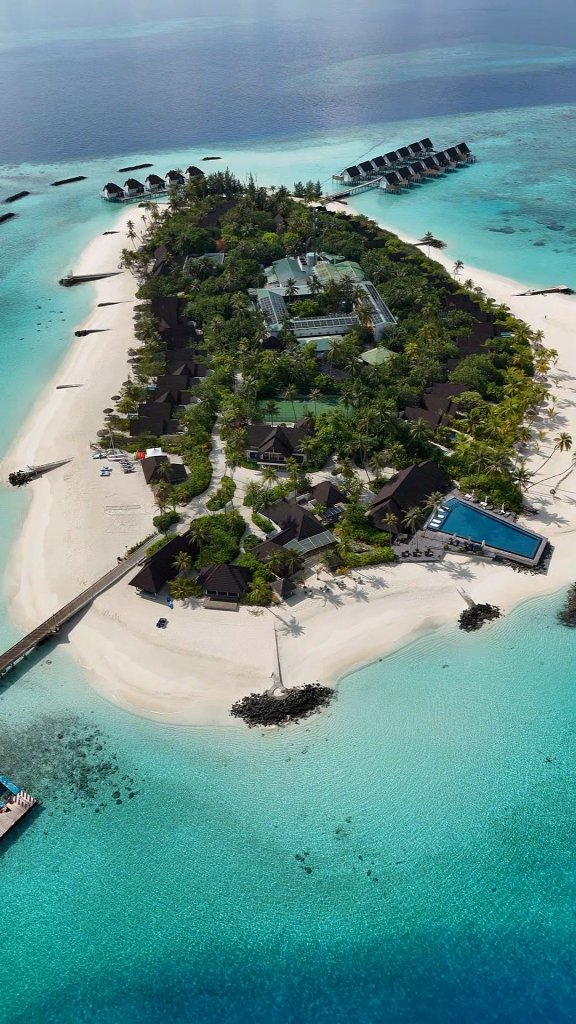
The luxury holiday vibes that the Maldives has been associated with can be found on the luxury resort islands. They feel much more special, intimate and if you choose the right one, authentic too. Freedom is given and they feel more romantic. Fushifaru for example, is Maldivian owned and makes the effort to make the experience as authentic as possible. However, the luxury resorts come with hefty price tags.
Some people prefer to do both sides and for those I have asked, they confirm how different they are. Personally, the Maldives is one of those trips that I always wanted to do in the OTT luxury craze. I wanted the overwater villa, secluded island and all the fancy trimmings – that was exactly what I got.
For resort inspo on where to stay in the Maldives, see my review of our luxury stay at Fushifaru.
Maldives Travel Guide: Entry Requirements for the Maldives
Visa Requirement for the Maldives: If you are travelling to the Maldives for tourism, no visa is required prior to going to the Maldives. It is one the few countries that allows every nationality sans visa. Once you arrive to the Maldives, you are issued a 30-day free visa on arrival.
Passport Validity: Passports need to be valid with Machine Readable Zone and have at least 1-month validity. You may be asked for your travel itinerary – return flight, hotel and/or onward destination evidence. We were not asked to show our itinerary but a few people I know have been asked.
Travel Declaration form: Whilst there is no visa required, you have to complete a travel declaration form before entry and exit. It can be done within 96 hours of flight time and is a Maldives Immigration procedure. The form which can be found on the immigration website is straightforward and you will be asked about it. We actually forgot to complete it on our way out and had to do it last minute. Thankfully, there was wifi at the airport and this was not a hassle at all.
Flying to the Maldives
There are a lot of international flights that land at Velana International Airport, Male. We flew Qatar Airways and could see Etihad, British Airways and Emirates when we landed. There are a few other airlines that fly to Male so check your local airports. British Airways flies directly from the UK to Maldives but if you don’t mind breaking your trip, consider other airlines. The flights from London to Male non-stop is between 10-11 hours.
RELATED POSTS:
WHERE TO STAY IN THE MALDIVES: FUSHIFARU MALDIVES
WHERE TO STAY IN DOHA: MONDRIAN DOHA
The Maldives is usually GMT +5hrs, which makes it 5 hours ahead of the UK in autumn/winter. When the clock springs forward in England around springtime, the Maldives becomes 4 hours ahead. I found out that some islands have their own specific time to give guests more daytime hours. However, our resort stuck to the general Maldivian time (MVT) of +5hrs when we visited in March. You can check with your resort if the time is different from the MVT.
How to get to your resort in the Maldives
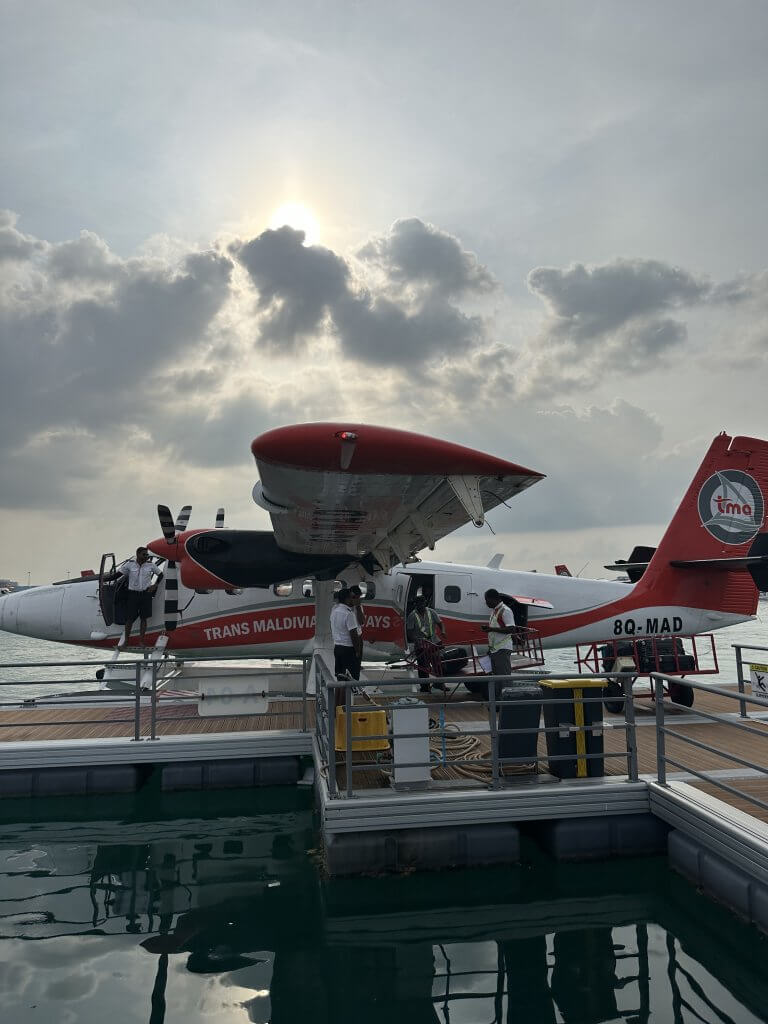
Seaplane or boat transfer are the main forms of transfer from the airport. Not all resorts cover your transfer; so email ahead to let them know your arrival and departure times from Male airport. Seaplane transfer is usually an additional cost unless your resort has an inclusive promo. They are quite expensive but I guess it is all a part of the experience. Our seaplane was $510 per adult (exclusive of taxes) – very steep but worth it.
To note: There is a weight limit for luggage you are allowed to bring on the seaplane. 20kg for check in luggage and 5kg for hand luggage per passenger. I had to pay for excess luggage, which was $5 per every extra kg, and then add tax on top.
Maldives Currency
The currency widely used in the Maldives is Rufiyaa (MVR) which is a closed currency. However, the US dollar is widely accepted. I was able to use my starling bankcard in the resort, the airport in Male and the local island. This means that you really don’t have to withdraw cash especially if your destination is a resort.
What is the Culture in the Maldives like?
With regards to culture, this Maldives Travel Guide will focus on religion as I think it forms the Maldivian culture. The Maldives is a Muslim country; therefore you have to be careful with what you are bringing into the country.
Alcohol (including alcohol bought at duty free) is not allowed. Stick to the alcohol offered at your resorts. Also, no pork, religious books or idolatry figurines are allowed into the country. My friend had a little Buddha figurine she had bought in Bali and this was not allowed. I am unsure how they saw it but it was found and confiscated; she was told she could collect it on her way out.
It is also important to note Ramadan dates as this might affect your transfer when you arrive at Male. This will also affect your experience if you are staying on one of the local islands. For the local islands, transfer from Male might be impossible at specific times on Fridays. This is due to Prayer times and just things being generally slower on Fridays.
For resort islands, check with the resort to see what their arrangements look like. Seaplanes will fly on Fridays so this is most likely not a problem for resorts.
Extra taxes due to import costs
This is very important to note when it comes to the Maldives because the taxes are actually brutal. I remember when we were booking the resort and saw the cost. “oh this is not too bad” I thought until I got to check out and saw the final figure.
The first tax of 10% was for service charge and then 16% for GST (Goods & Service Tax). So for every thing on the resorts, you pay around 26% tax on top of whatever the price is. There is also a greet tax which is a flat $6 per day per person. It is important to note that almost everything in the Maldives is imported hence the heavy tax. Things are already expensive on their own because the Maldives is an expensive destination. So the tax addition makes things even wilder.
Maldives Travel Guide: The best time to visit the Maldives
Peak period is between December to April, as it is known as the driest time during the year. This means that December to April is the best time to visit the Maldives. However it is generally ok all year round.
The monsoon season is between June to October but I’m not sure what global warming is saying these days. One thing we noticed was that even when it rained, it did not last long and dried up quite quickly. However, we visited in March so maybe this is only applicable in dry season.
Is the Maldives Family Friendly?
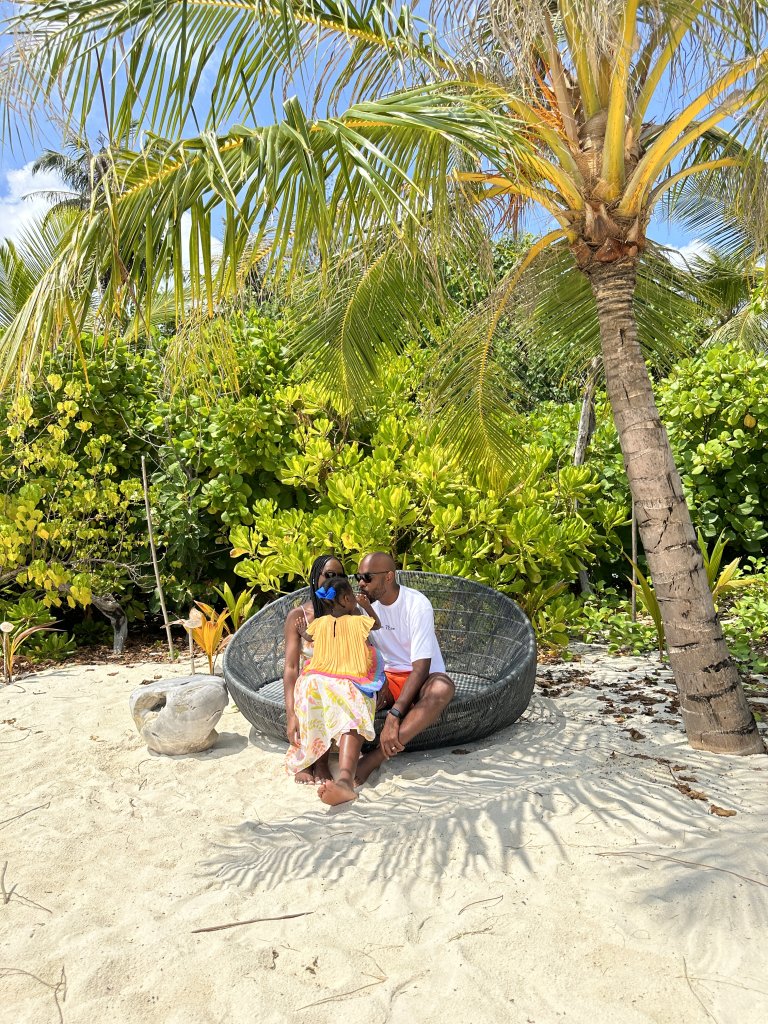
I had this belief before I did any research that the Maldives is for romantic couples. Don’t get me wrong, it is very romantic but in a wholesome way. It is perfect for families and if you pick the right resort, your littles will have the best time. This is where I bring Fushifaru in again lol. Honestly we had the absolute best time and it was perfect for Adanna.
The Maldives is very laid back and most resorts have kids clubs. They also have lots of kids’ activities daily to keep the littles engaged. I genuinely think the Maldives has managed to carve itself as a destination for everyone. I see it as a perfect solo travel destination as well. The quiet is perfect for writers and the activities are perfect for friend groups too. Now that I have been to the Maldives, I can tell you for free that anyone and any group will have the best time there.
How long is enough time for the Maldives?
Depending on where you are flying from, the Maldives is most likely a far destination to travel to. I would recommend at least 5 nights to feel rested. However, if you can spare it, 7 nights is the best amount of time to spend in the Maldives.
If you are staying on the resort islands, you could lose 1-2 days travelling. There could be a wait for the seaplane transfer as they follow their own schedule and are subject to delays. So this is something to think about when booking the trip. We spent 6 days and it was just enough considering we had done 72 hours in Doha prior to Maldives.
The eco system in the Maldives
The Maldives as a country prides itself on being a destination that has thrived due to its strict laws. I think that’s what makes it one of the most unique and magical places in earth. The laws include the animals and plants that inhabit this beautiful island. As it is a haven for coral reefs, you can imagine the extent to which everything is protected. You are prohibited from touching the animals and plants when snorkelling. It can seem very tempting but remember to look but not touch. The reason is to protect the eco system.
Tipping in the Maldives
As this is a Maldives travel guide, this is an important topic. Whilst tipping is not mandatory in the Maldives, it is encouraged. If you are American, you are most likely used to tipping as it is quite enforced in the US. However, as someone who lives in the UK, tipping is something I have had to learn in my travels.
If you are staying in one of the luxury resorts, you are most likely going to be on one of the meal plans. Therefore, restaurant visits or those bar stops might not cost you anything additional. However, there will be excursions and services that might require staff to go out of their way to help. You want to have some cash to tip them as a thank you. This is not mandatory at all but I noticed how happy and thankful each staff we tipped was.
Take out some cash before you get to the resort because most resorts don’t have free cash machines. I had to take out $100 in my resort and was charged extra $5 in tax – not much extra but it is something to note. For tip to give, that rests on your personal choice. We tipped between $10-$20 depending on service; and then to our hostess $100 at the end of our stay. I would have tipped her more if I had more cash tbh; she made our stay so incredibly wonderful.
Beach Villa or Water Villa in the Maldives?
This is a very popular question when researching the Maldives. I would say both as they give different vibes. Most resorts are happy to move you between rooms as they are used to this.
Beach villas are typically cheaper but equally beautiful in my opinion. They are also more family (especially toddler) friendly and give direct access to the beach. Water villas are romantic and epic so this is a no brainer if you have the opportunity to stay in one. I think this is what makes the stay just a little more special. In terms of cost, the water villas usually cost a lot more so it is another thing to consider. For 7 days in the Maldives, 5 days in beach villa and 2 days in water villa are perfect.